Garmin watch face and app
Kizashi - Daily HoroscopeToday's signs, read from the sky you were born under and the Moon.
The watch face, the app and the service are all free.
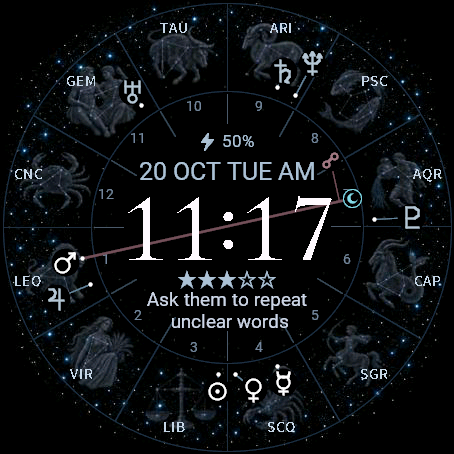
A line of guidance every time you check the time. The watch face, Kizashi Sora, draws today's sky on the face once you choose your sign, with the overall stars and a short line. The companion app, Kizashi Kotoba, reads your birth chart against the Moon's movement each day and chooses advice across seven topics, from work and love to money.
Now on the Connect IQ Store: Kizashi Sora · Kizashi Kotoba
Who has the best luck in the world today?
Every day, the stars pick 25 birthplaces around the world. Find out where today's No. 1 was born.
Features
A little of today's sky,
every time you glance.
Kizashi is made of two parts: Sora, the watch face, and Kotoba, the app for reading. In Japanese, kizashi means an omen, sora the sky and kotoba words. Either works alone. With both installed, press and hold the Sora screen and Kotoba's overall page opens.
01
Kizashi Sora
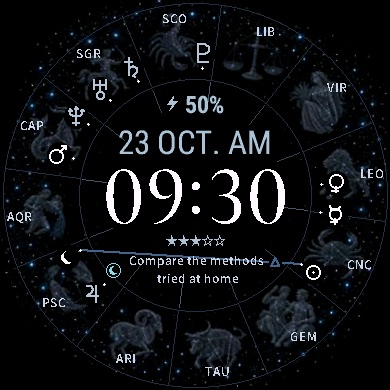
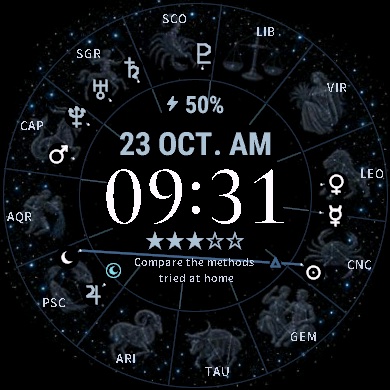
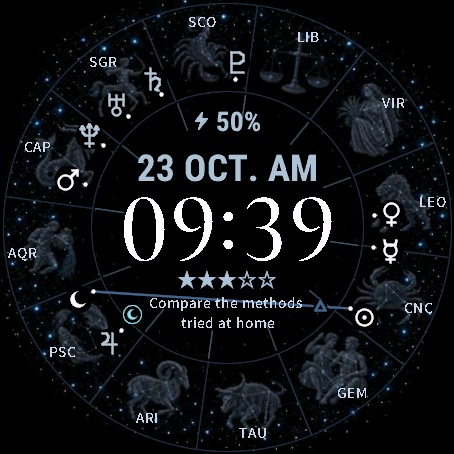
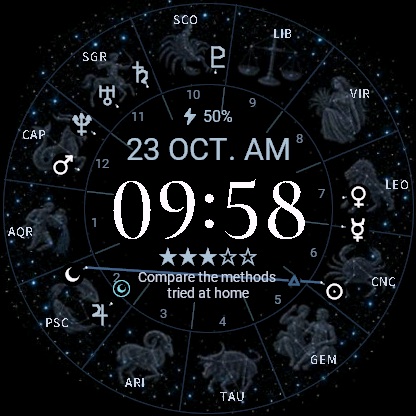
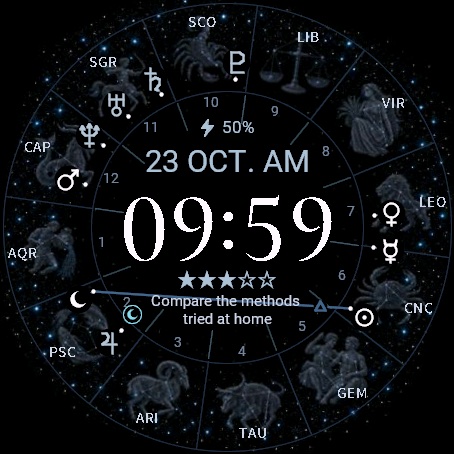
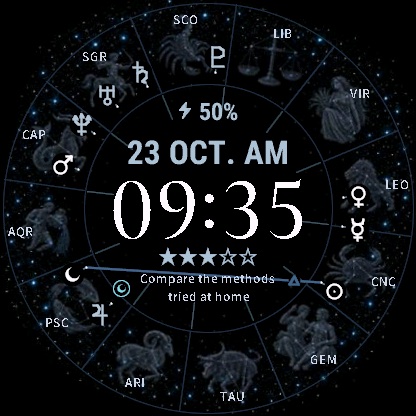
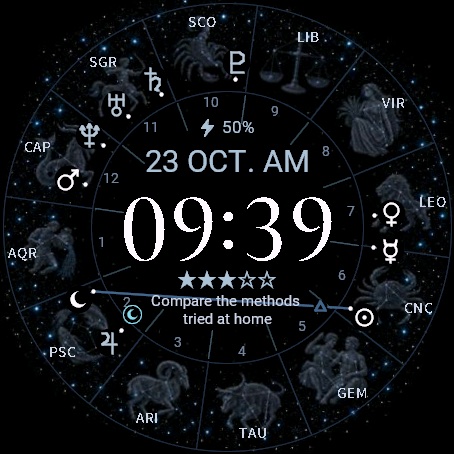
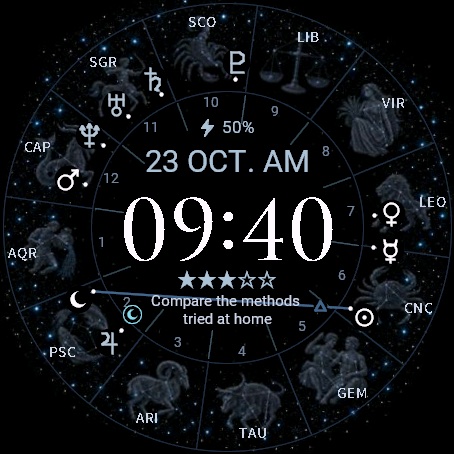
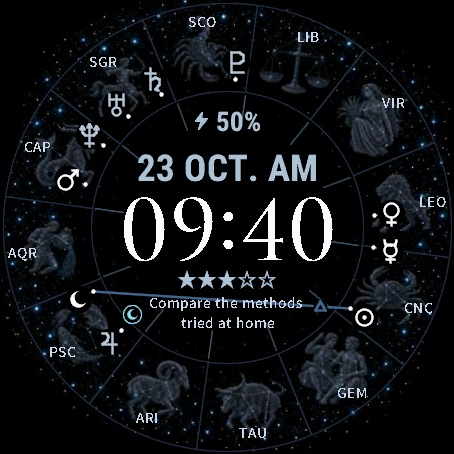
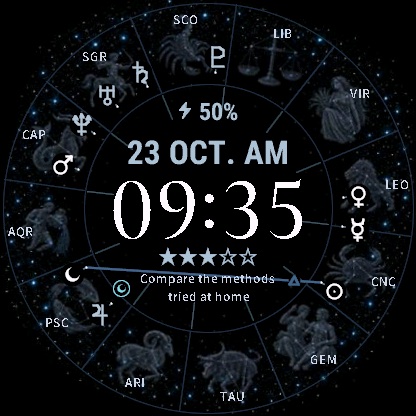
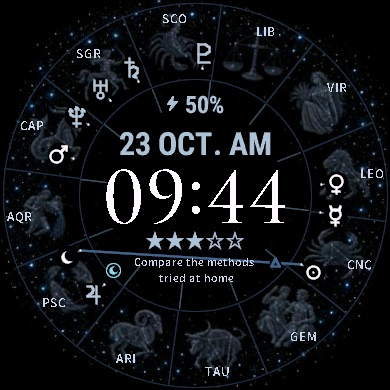
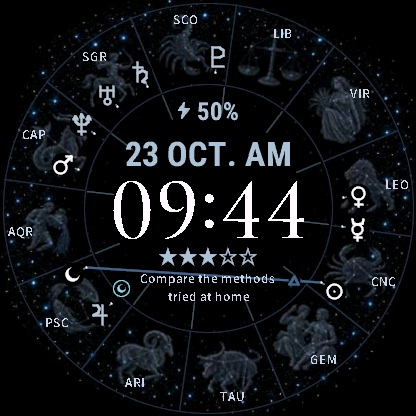
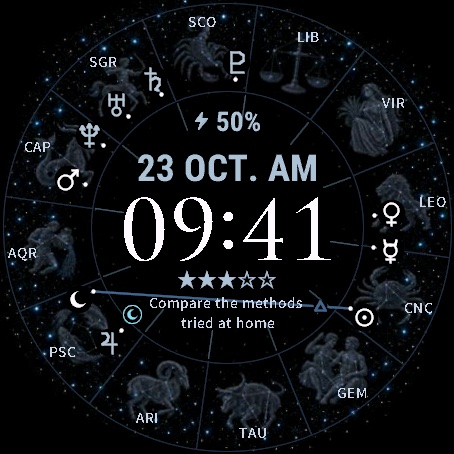
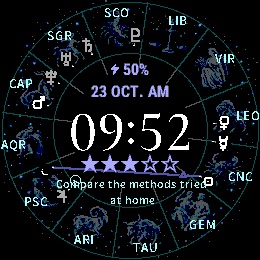
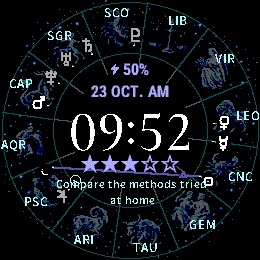
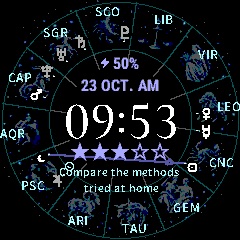
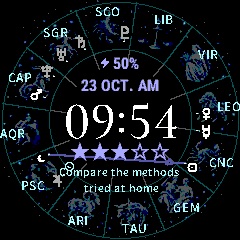
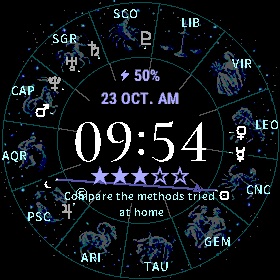
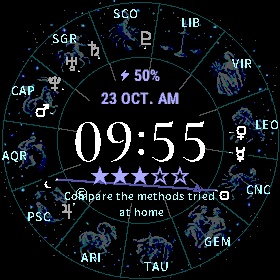
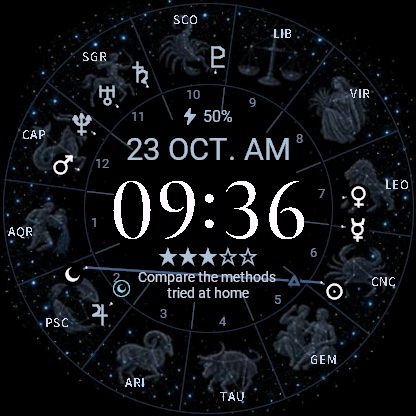
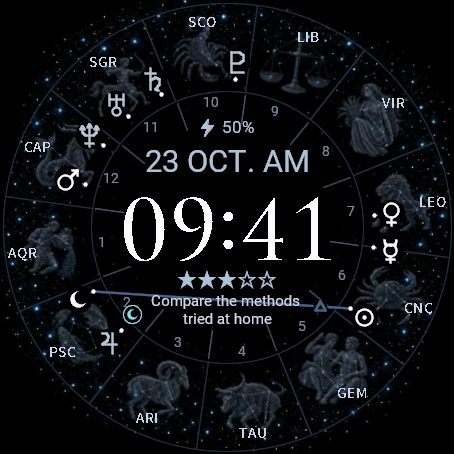
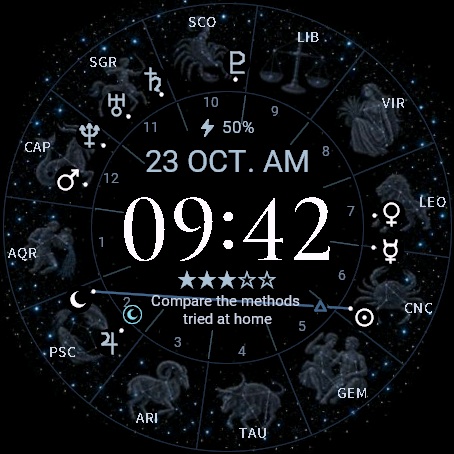
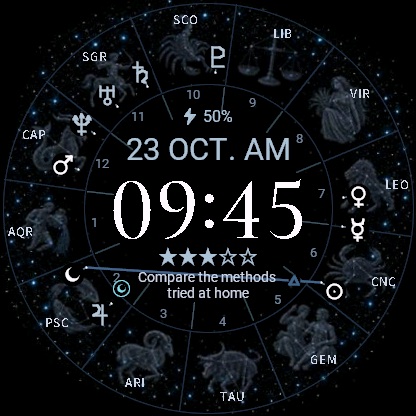
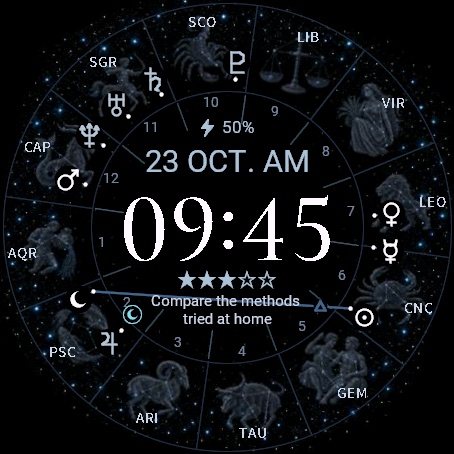
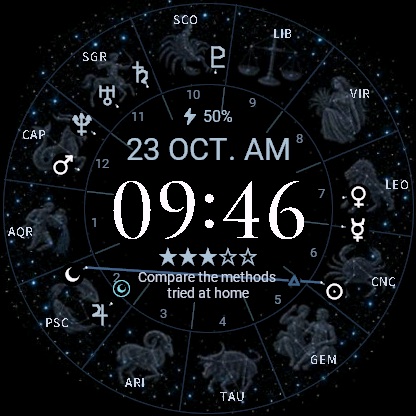
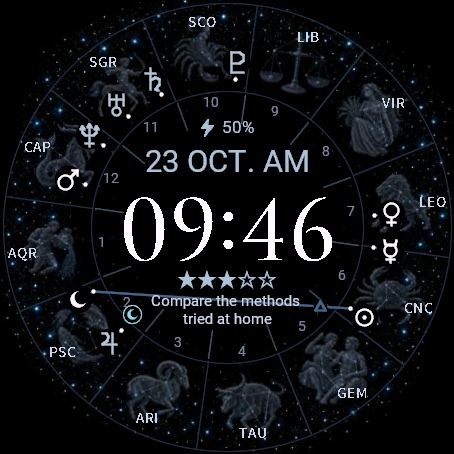
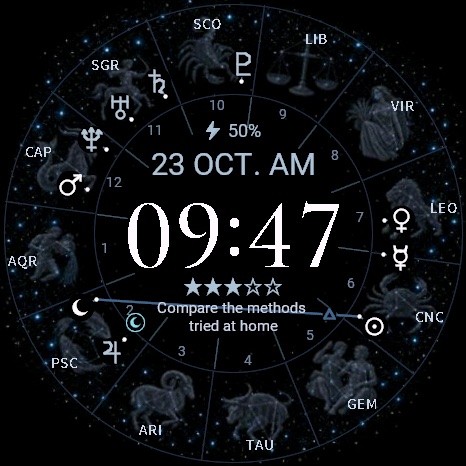
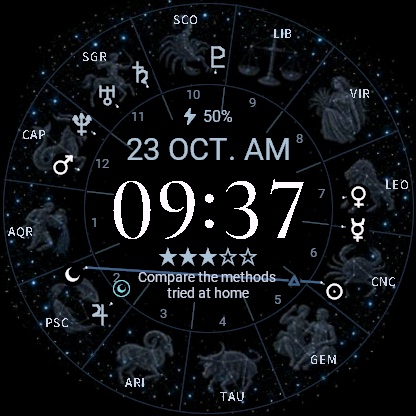
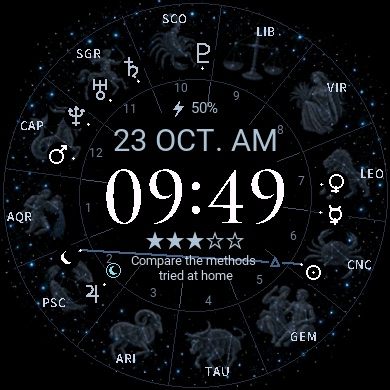
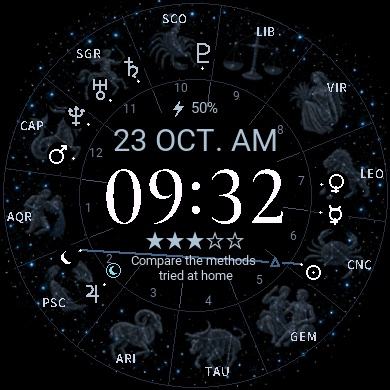
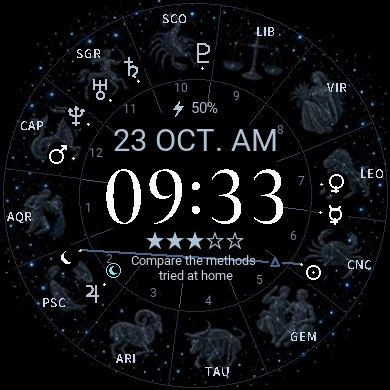
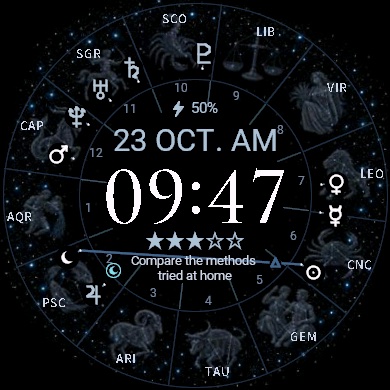
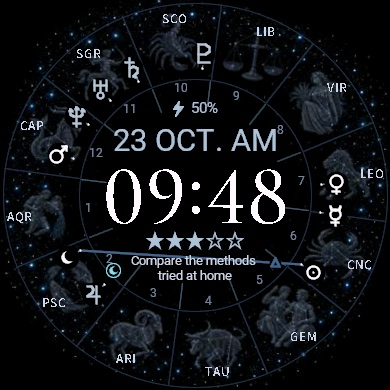
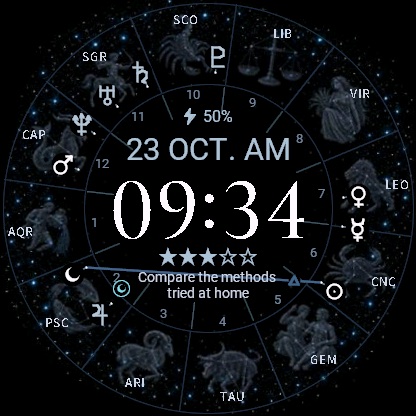
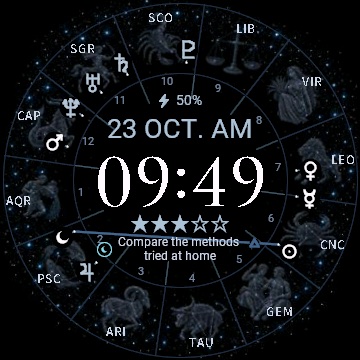
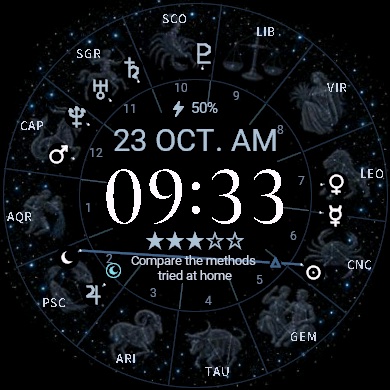
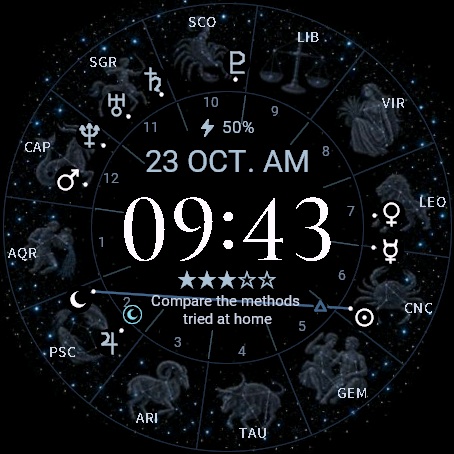
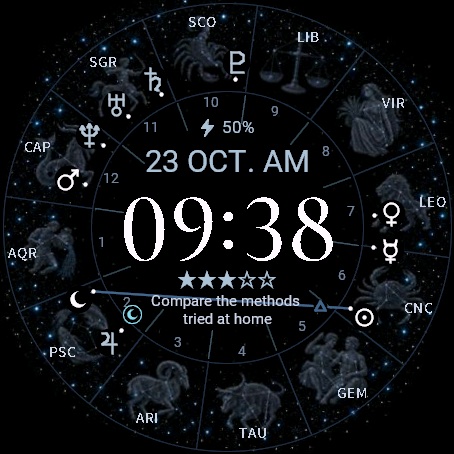
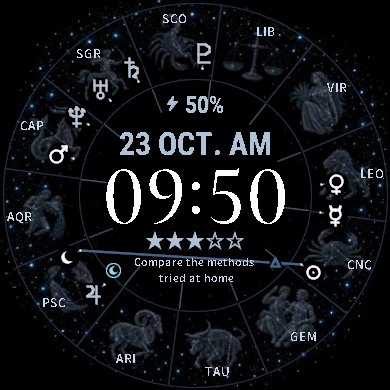
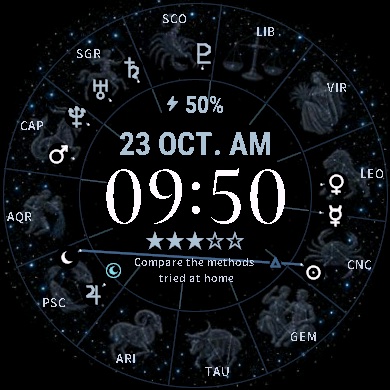
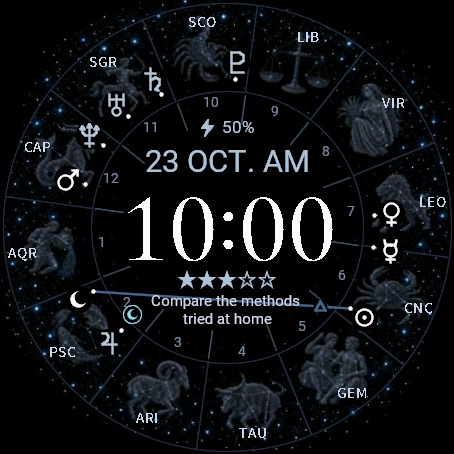
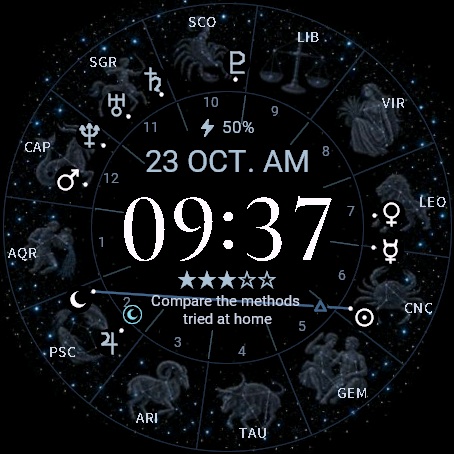
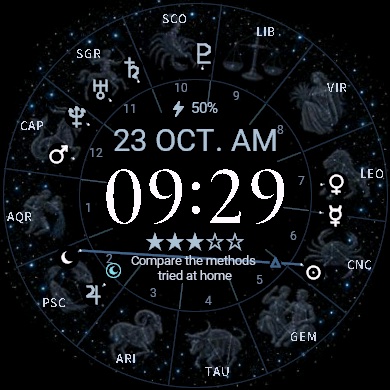
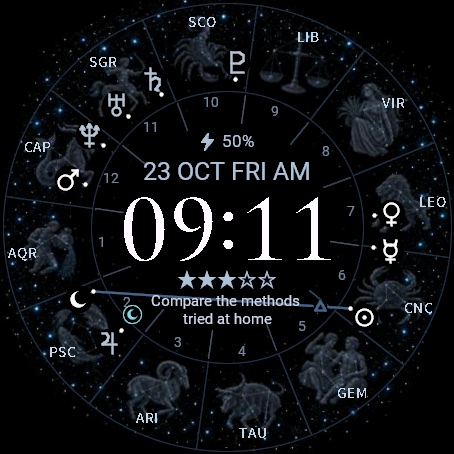
A watch face. Just choose your sign from the twelve. A large clock is surrounded by today's sky, with the overall star rating and a short line. No birth date is needed.
02
Kizashi Kotoba
A companion app. A reading that is yours alone, from your date, time and place of birth. Seven topics, one page each, which you scroll to the end. The overall page lets you compare how each topic looks.
03
Lucky details
In Kotoba: today's color, item, place and number, plus food, drink and exercise ideas that respect the foods you avoid and the activities you prefer.
04
Student mode
In Kotoba, switch to guidance written for school days and friends. It never suggests alcohol or coffee. Available in Japanese and English.
05
Six languages, plus Easy English
Readings in English, Japanese, German, French, Traditional Chinese and Korean, and Easy English for learners.
06
Wherever you are
Days follow your watch's local time, so on a trip your reading changes with the local date.
- Overall
- Work
- Money
- Love
- Study
- Health and exercise
- Home and living
Screens
Every glance,
today's sky.
These are real screens from the watch (on October 23, 2026). Kizashi Kotoba is shown in the language of this page, Kizashi Sora in English. Kotoba's birth chart is a kite: a grand trine of three planets, with a fourth opposite one of them.
Kizashi Sora
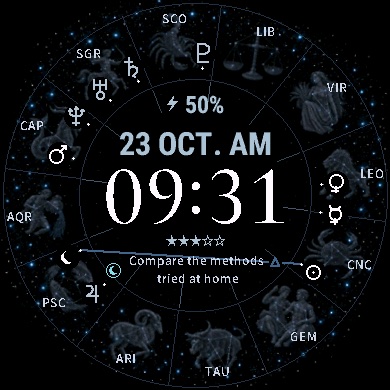
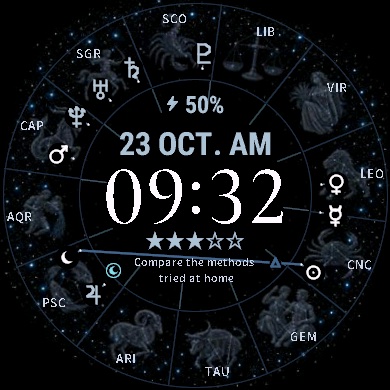
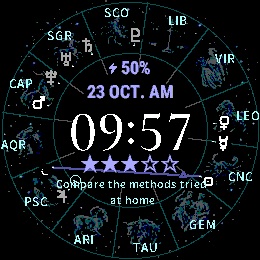
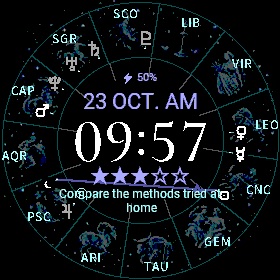
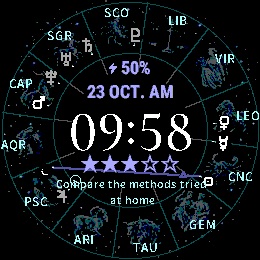
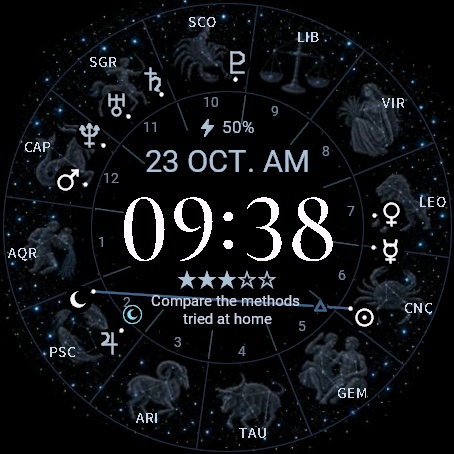
The watch face. Pick your sign for today's sky, your stars and a short line.
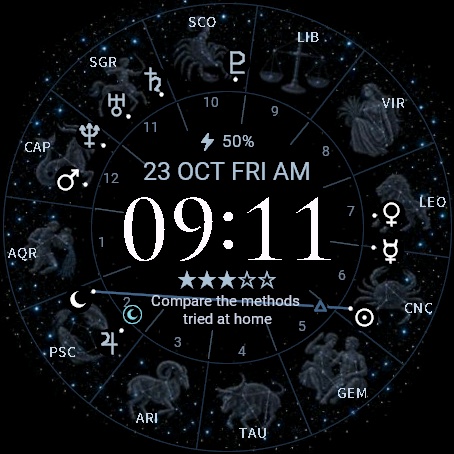
Digital 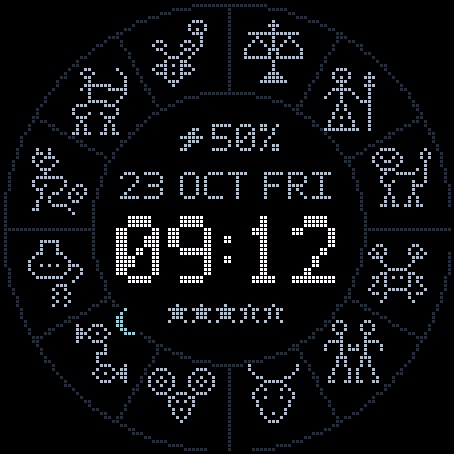
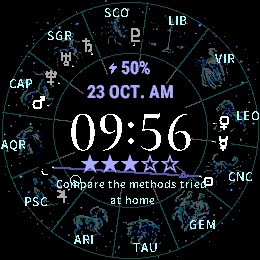
Dot matrix 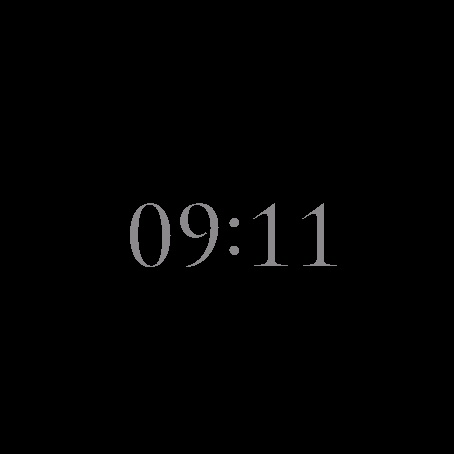
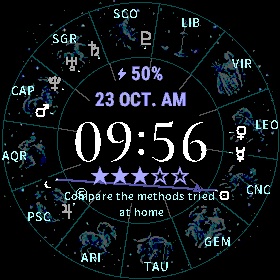
Always-on
Kizashi Kotoba
The app. Themed readings and the flow of your days, from your birth chart.
Today
From the first page to your overall stars and lucky picks.
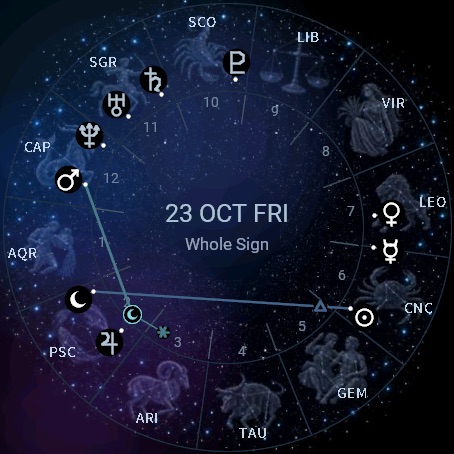
The first page: your birth chart and today's Moon 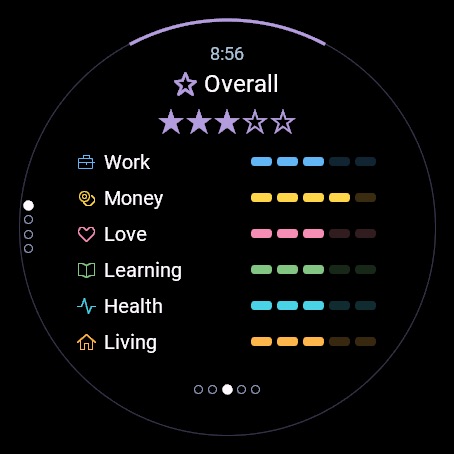
Overall, with a gauge for each theme 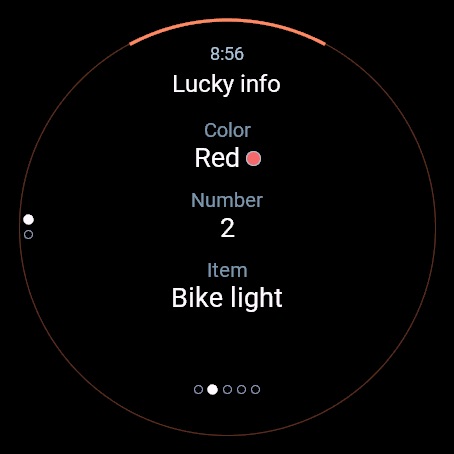
Lucky picks
The flow
Today, the next 7 days and the next 4 weeks.
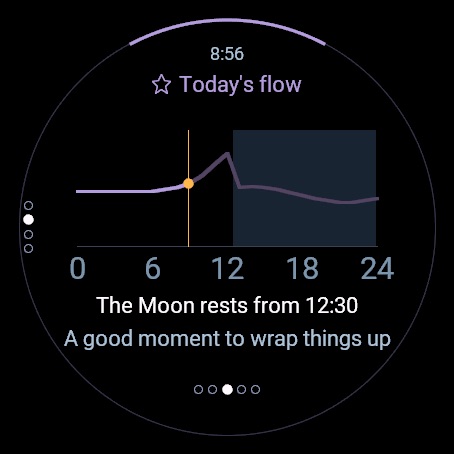
The flow through today 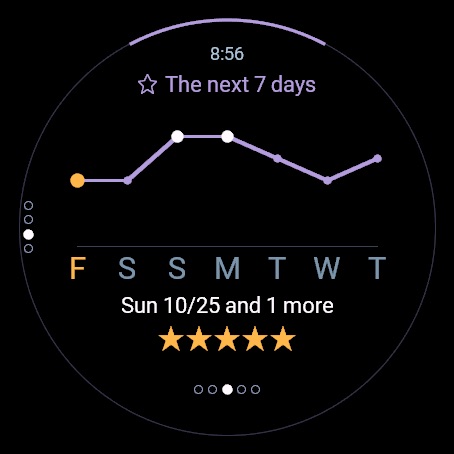
The next 7 days 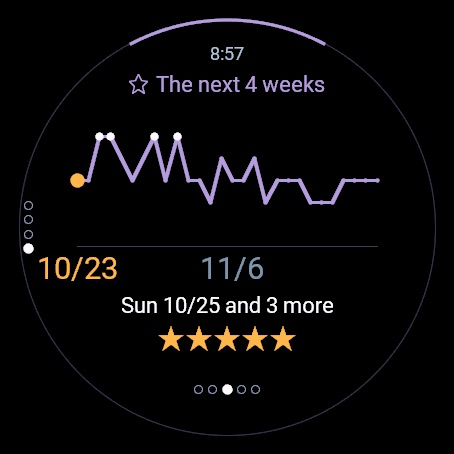
The next 4 weeks
Themed readings
Six themes, each with its own reading.
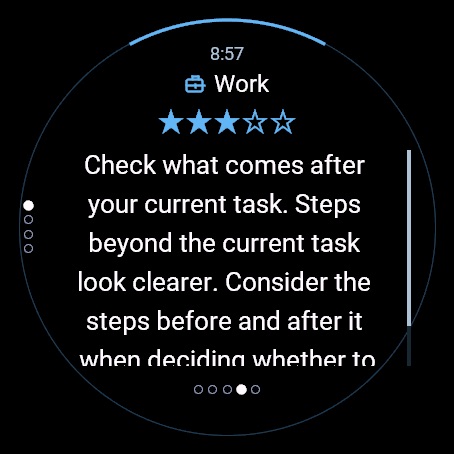
Work 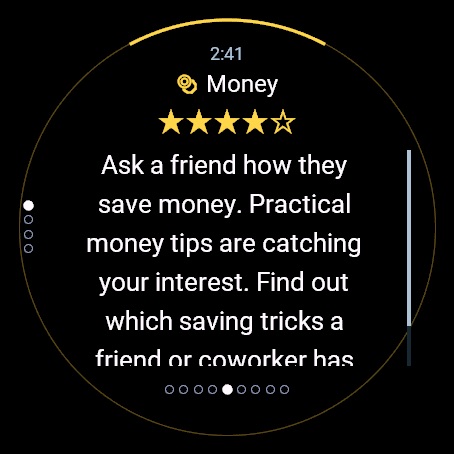
Money 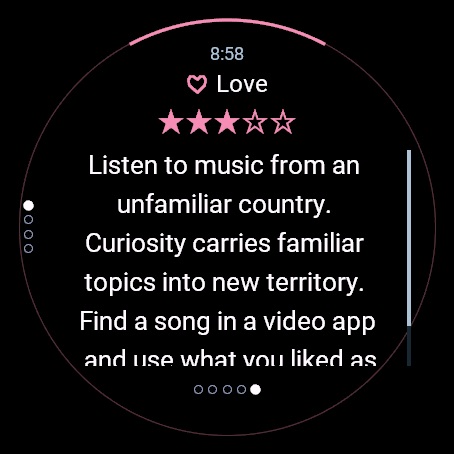
Love 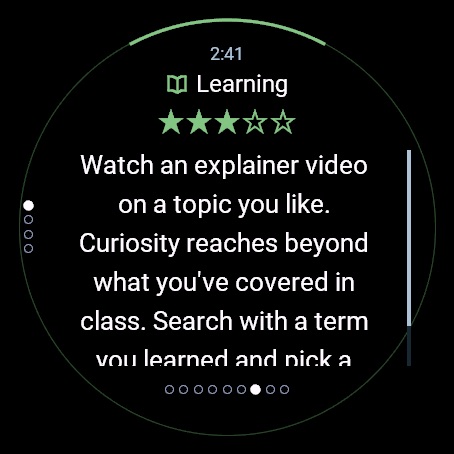
Learning 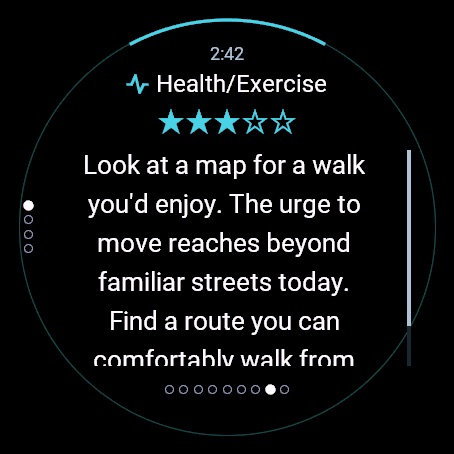
Health and exercise 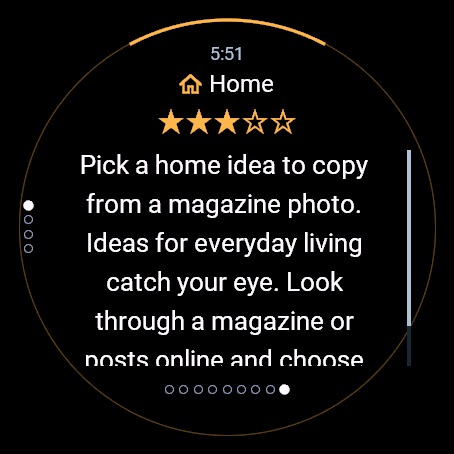
Home
Your chart
Your birth chart and today's sky, drawn and listed.
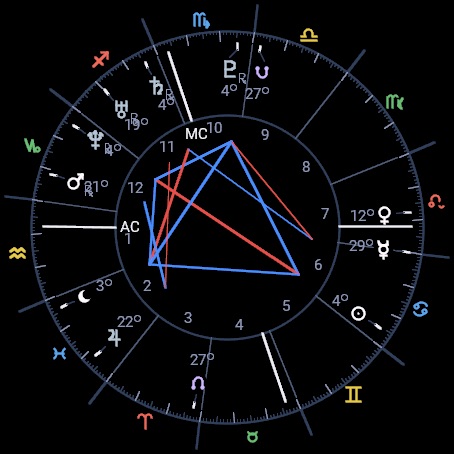
Birth chart and aspects 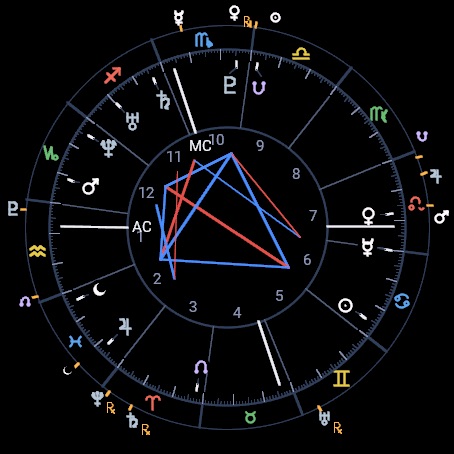
Today's sky over your birth chart 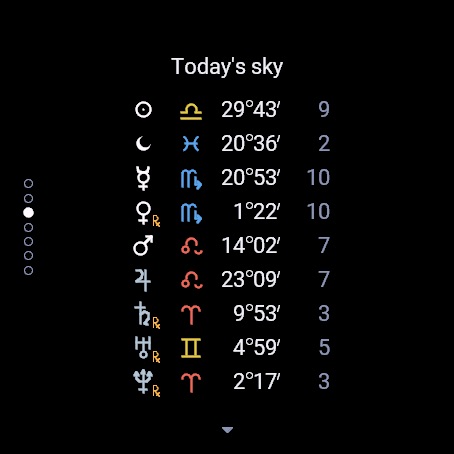
Where the planets are today 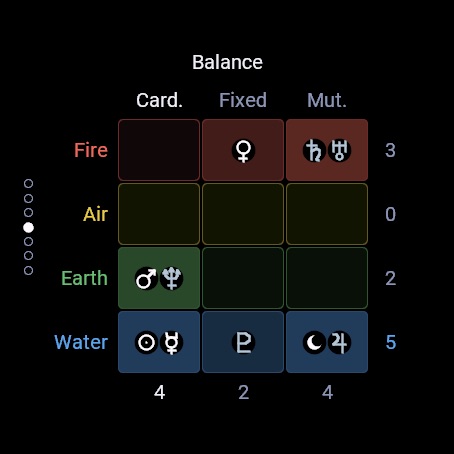
Balance of elements and modes 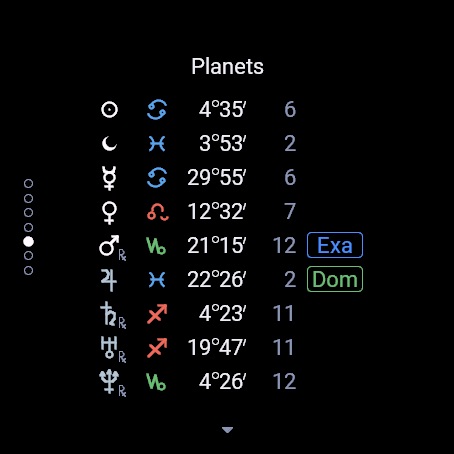
The planets at your birth 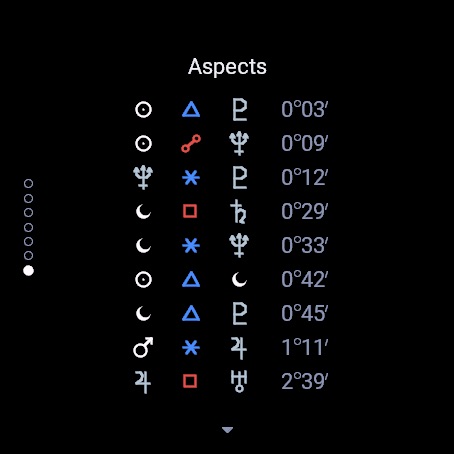
The aspects
Devices
On 60 Garmin watches.
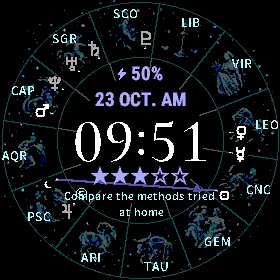
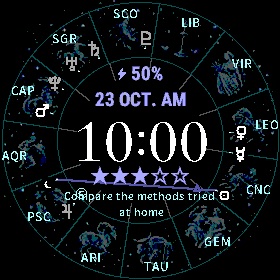
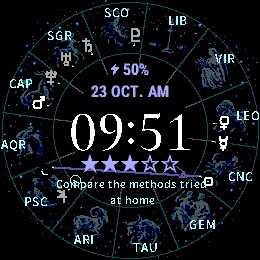
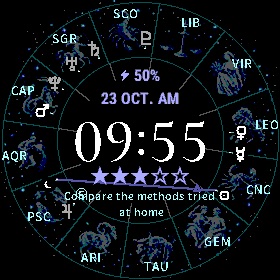
Drawn for AMOLED and MIP screens alike. Choose your watch to see Kizashi Sora on it.
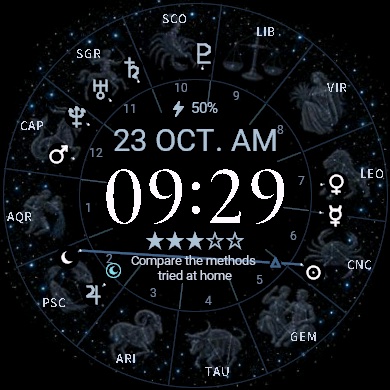
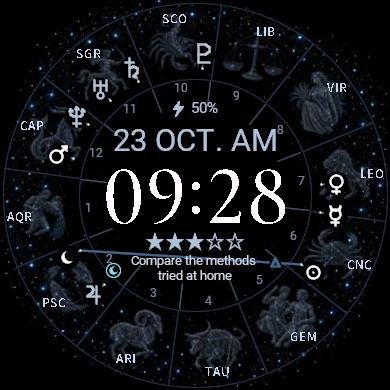
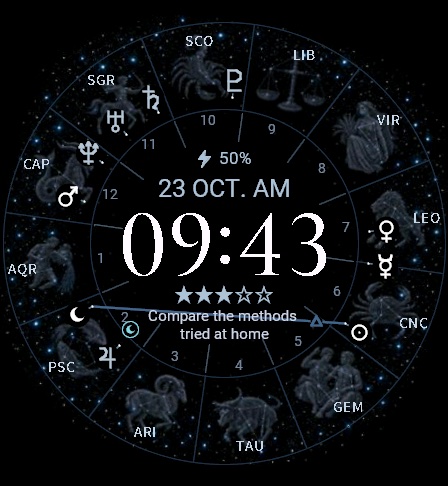
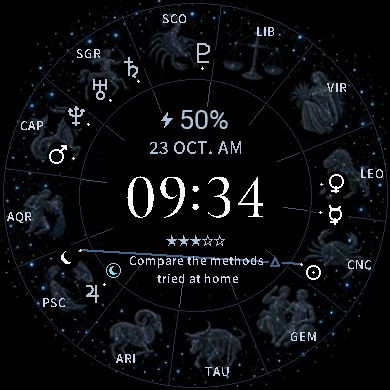
No matching watch.
Getting started
Three steps to start.
01
Install it
Add the Kizashi Sora watch face and the Kizashi Kotoba app to your watch from Garmin's Connect IQ Store. Either one works alone.
02
Choose your sign or enter your birth details
For Sora, just choose your sign, in the watch menu or in the Garmin Connect app on your phone. For Kotoba, enter your date, time and place of birth in the Garmin Connect app, and readings use your houses in full. If you don't know your birth time, you can start with Solar Sign. You can look up your birthplace coordinates here.
03
Sync
When your watch connects to your phone, two weeks of readings arrive. Kotoba receives every topic together while the app is open. Then just glance at your watch.
Birthplace coordinates
Find your birthplace coordinates
Kizashi Kotoba's settings take your birthplace as one line: “latitude, longitude”. Search for your town or choose it from the lists, then copy the value and paste it into the setting.
Or choose from the lists
Not listed? Choose the nearest larger town.
North and east are positive; south and west are negative. One decimal place (about 10 km) is all astrology needs: the difference is smaller than one minute of birth time.
How it reads
Read from the day's sky,
not drawn from a hat.
Kizashi Kotoba's readings are chosen as follows. Kizashi Sora's line is chosen from where today's Moon and Sun are as seen from your chosen sign, and the same line is never repeated within two weeks.
The Moon and your birth chart
The Moon moves into a new house about every two and a half days and forms angles with the planets in your chart. The day's angle and the planet's meaning decide the reading.
Waxing and waning
The same angle reads as a day to start things while the Moon is waxing, and a day to tidy up while it is waning.
New and full Moons, and the resting Moon
On turning points, and while the Moon makes no angle to any planet (void of course), the overall page adds a short note.
Same sky, same words
No random numbers. For the same day and the same birth chart, you always get the same guidance.
An overall reading, translated
Reserve a block of time for yourself.
Your time and the time you share with others are asking for balance. Put a personal slot into your calendar.
One sync, two weeks.
Two weeks of readings are saved on your watch. You don't need to connect to your phone every day; when the date changes, the reading and the planets update on their own.
How it works
How your reading reaches your watch
Kizashi has three parts that work together: your watch, your phone and the Kizashi server.
Your watch
Kizashi Sora · Kotoba
- Draws your horoscope wheel and today’s sky, and shows the stars and the line
- Checks every 12 hours, and asks only when fewer than 7 days are left
- Keeps 14 days and turns the page at midnight, phone or not
Your phone
Garmin Connect app
- Where you enter your sign (Sora) or birth details and preferences (Kotoba)
- Sends your settings to the watch
- Relays requests and readings; the watch cannot go online alone
Kizashi server
Cloudflare Workers
- Calculates the planets and the Moon’s path for each day
- Chooses each day’s advice from about 10,000 written readings
- Keeps no user database of birth details
House systems
Same sky, different houses
Houses divide the sky at your birth into twelve areas of life. There are several ways to draw them, and the same planet can land in a different house depending on the method. Below, one made-up chart (Tokyo, 21 June 1990, 08:30) is divided five ways. Switch the tabs: the zodiac ring stays put, and only the house lines move.
Whole Sign
One sign, one house.
Origins
The oldest recorded method, used by Hellenistic astrologers around the turn of the common era. The sign rising in the east at birth becomes the whole first house, the next sign the second, and so on. Indian astrology still uses it, and in the West it returned in the 1990s as ancient texts were translated.
Features
- Every house is 30° and matches a sign exactly
- A small error in the birth time changes nothing unless the rising sign changes
- The MC does not always start the tenth house; it can fall anywhere from the ninth to the eleventh
Equal House
Thirty degrees from the Ascendant.
Origins
Another method with ancient roots. The exact degree of the Ascendant starts the first house, and every house after it is 30°. It found renewed support in twentieth-century Britain.
Features
- Every house is 30°, but the boundaries fall mid-sign
- The Ascendant always starts the first house; the MC may not start the tenth
- The houses do not distort at high latitudes
Placidus
Houses measured in time.
Origins
Named after Placidus de Titis, a seventeenth-century Italian monk and mathematician. It divides into thirds the time each point of the sky takes to rise from the eastern horizon to the top of the sky. Tables of Placidus houses spread widely in nineteenth-century England, and it became the most used system in modern Western astrology.
Features
- The houses differ in size: some wide, some narrow
- The Ascendant starts the first house and the MC the tenth
- Sensitive to the exact birth time, and it cannot be calculated near the polar circles
Koch
The birthplace system.
Origins
Published in the mid-twentieth century by the German astrologer Walter Koch (1895–1970). Because it gives special weight to the place of birth, it is also called the birthplace system, and it is popular in German-speaking countries.
Features
- Like Placidus, it is unequal and built on the Ascendant and the MC, and the results are often close
- The boundaries between the Ascendant and the MC fall slightly differently from Placidus
- Sensitive to the birth time, and it cannot be calculated near the poles
Solar Sign
Counting from the Sun’s sign.
Origins
The sign holding the Sun becomes the first house, and the signs follow one per house, as in Whole Sign. The twelve-sign horoscopes in twentieth-century newspapers and magazines rest on this idea.
Features
- It needs neither the birth time nor the birthplace
- Everyone with the same Sun sign has the same houses
- It suits people who do not know their birth time; Kizashi uses it then
| Planet | Whole Sign | Equal House | Placidus | Koch | Solar Sign |
|---|---|---|---|---|---|
| Sun? | 11 | 11 | 11 | 11 | 1 |
| Moon? | 11 | 10 | 10 | 10 | 1 |
| Mercury? | 11 | 10 | 10 | 10 | 1 |
| Venus? | 10 | 10 | 10 | 10 | 12 |
| Mars? | 9 | 8 | 9 | 8 | 11 |
| Jupiter? | 12 | 11 | 11 | 11 | 2 |
| Saturn? | 6 | 6 | 6 | 6 | 8 |
House check
Which house system
fits you?
Astrology divides the sky into twelve houses, each standing for an area of life, and reads which area the Moon and planets are lighting up. There are several ways to draw those divisions, so the same day can read as a "career day" in one system and a "friends day" in another.
This check picks recent days on which the systems disagree. Choose what matched your day, and see which system fits you best.
- 1Yourself
- 2Money and belongings
- 3Everyday exchanges
- 4Home and family
- 5Fun and romance
- 6Daily duties
- 7Partners
- 8What you share
- 9Learning, the wider world
- 10Career and standing
- 11Friends and hopes
- 12Time alone
- 1Birth data
- 2Recent days
- 3Result
You can switch house systems at any time in the Kizashi Kotoba settings. A few remembered days are only a hint, so try it for a while.
How it works
- What it reads
- The moments in the day (local midnight to midnight) when the Moon perfects an aspect to a natal planet, the ASC or the MC. When there are several, the topic's significators and the ruler of the topic's house come first.
- How readings differ
- The same aspect reads differently by the Moon's house, whether the Moon is waxing or waning relative to the point, and the natal axis the Sun is crossing. Days without an aspect read the void-of-course Moon; new and full Moons read as turning points.
- Calculation
- Tropical and geocentric, calculated with the Swiss Ephemeris. Houses: Whole Sign, Placidus, Koch or Equal, and Solar Sign when the birth time is unknown.
- Wording
- Each day's reading is chosen from about 10,000 texts written in advance for each topic and situation.
FAQ
Should I install Kizashi Sora or Kizashi Kotoba?
If you want a quick look at today, choose the Sora watch face. Once you pick your sign, it shows today's sky, the overall stars and one line on the face. If you want detailed readings by topic from your own birth chart, choose the Kotoba app. With both installed, press and hold the Sora screen and Kotoba's overall page opens.
What if I don't know my birth time?
Use Solar Sign. It never guesses a birth time; the sign of the Sun on your birthday becomes your first house. Tick “I don't know my birth time” in the house check and it will point you to this system.
Which house system should I choose?
Try the check above. As a rule of thumb, if your birth time comes from a record, Placidus or Koch suit you; if it is an approximate memory, choose Whole Sign. If you were born far north, such as in northern Scandinavia, Placidus and Koch may not be calculable.
How do the house systems differ?
Whole Sign uses one zodiac sign per house and is the oldest method. Placidus is the most widely used today. Koch is close to Placidus and popular in German-speaking countries. Equal House divides the chart into equal 30° houses from your Ascendant, a middle ground.
The check showed several house systems tied. Which should I choose?
Tied systems read your recent days the same way, so any of them will feel much the same. As a rule of thumb, choose Placidus or Koch if your birth time comes from a record, and Whole Sign if it is approximate. If unsure, Placidus, the most widely used, is fine. You can switch at any time in the settings if it doesn't feel right.
I was born during daylight saving time. How do I enter my birth time?
Enter the time on your birth record as it is. Daylight saving time is taken into account automatically from the history of your birthplace's time zone. If you were born in the hour that happens twice when daylight saving time ends, you can say which one in the setting “Birth UTC offset in hours (optional)”; if it is empty, the first one is used. A time that never existed because the clocks went forward is read as the later time.
Is my birth data stored?
Sora sends only the sign you choose and does not use birth details. For the birth details you enter in Kotoba, the calculation server does not save them in a user database. Settings and downloaded readings are saved on your watch. See our Privacy Policy for details, including operation logs associated with connections.
Is the health advice a substitute for medical care?
No. The health and exercise guidance is a hint for your day. If you are concerned about your health, please consult a medical professional.
The reading disappears too quickly.
How long the screen stays on is set on the watch itself. Lengthen the display timeout in the watch settings, usually under System → Display. The names vary by model.
What language are the readings in?
English (US or UK spelling), Japanese, German, French, Traditional Chinese and Korean, plus Easy English for learners. The watch follows your device language, and you can choose another one in the settings. The house check works in English, Japanese, German, French, Traditional Chinese and Korean.